



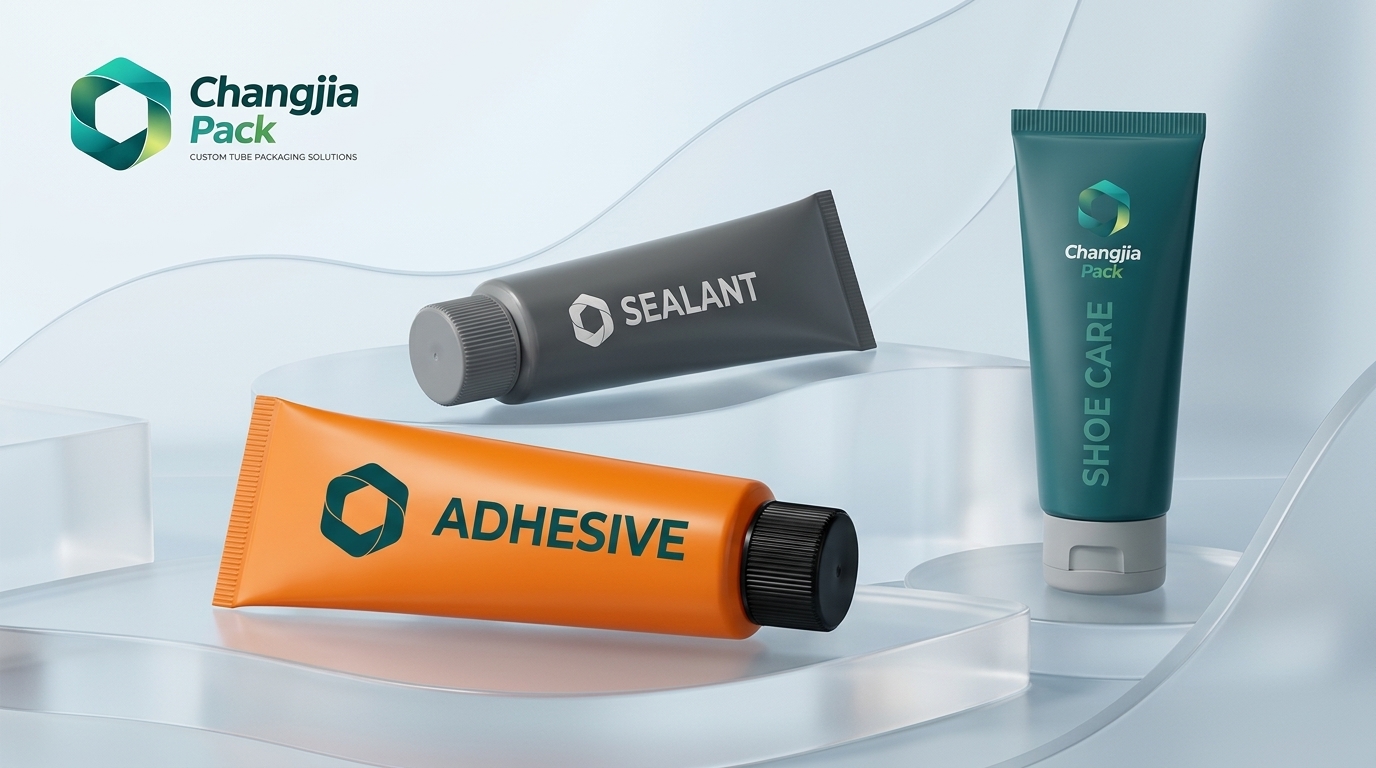
Industrial and specialty formulations—ranging from cyanoacrylates, silicone sealants, and synthetic lubricating greases to solvent-based shoe polishes—demand packaging engineered for chemical containment and precise application. Unlike standard cosmetic containers, industrial squeeze tubes operate under high extrusion pressures, direct exposure to aggressive solvents or mineral oils, and rugged work site environments. Selecting the right combination of tube body materials, dispensing orifices, tail seal configurations, and protective surface finishes should be validated against the actual filled product and intended use; a matched specification can support package integrity and controlled dispensing throughout the distribution chain. This guide details the essential engineering and procurement decisions required when specifying plastic squeeze tubes for industrial and technical applications.
Formulation Viscosity and Chemical Sensitivity: PE vs. Barrier Structures
The physical and chemical characteristics of industrial liquids and pastes determine whether a standard polyethylene (PE) monolayer construction or a multi-layer barrier structure is required. Volatile organic solvents, synthetic lubricants, and reactive chemical agents can migrate through basic plastic walls or cause stress cracking if the polymer matrix is incompatible. Conducting compatibility evaluations helps identify the correct barrier technology for long-term product stability.
- Monolayer and Multilayer PE: Suitable for stable, non-volatile pastes, greases, and shoe polishes where moisture or hydrocarbon migration is minimal.
- EVOH Co-extruded Tubes: Incorporate an ethylene vinyl alcohol barrier layer that can reduce gas and aroma transmission; suitability for solvents and oils must be confirmed through filled-product compatibility and shelf-life testing.
- ABL (Aluminum Barrier Laminate): Delivers maximum barrier performance against aggressive chemicals, moisture, and light, offering high collapse retention without air suck-back.
- PBL (Plastic Barrier Laminate): Combines chemical resistance with elastic recovery, maintaining tube shape during repeated squeezing in workshop environments.
Nozzle and Closure Engineering for Controlled Dispensing
Dispensing control directly impacts product performance and user safety when handling industrial adhesives, sealants, and heavy greases. The orifice diameter, nozzle geometry, and closure mechanism must match the rheological profile of the formulation and the target application method.
- Fine Point Adhesive Nozzles: Extended, tapered spouts designed for high-precision bead application of liquid glues, threadlockers, and low-viscosity adhesives without dripping.
- Wide-Bore and Flip-Cap Orifices: Ideal for high-viscosity gap sealants and dense repair pastes that require smooth volumetric flow under manual pressure.
- Threaded Screw Caps and Plug Seals: Can help limit moisture exposure before first use; the final closure system must be validated with the actual polyurethane, silicone, or other reactive formulation.
- Specialty Applicators: Tailored nozzle profiles that allow direct spreading for shoe care polishes, tool greases, and surface treatment pastes.
Tail-Seal Geometry, Hang-Tail Options, and Filling Line Compatibility
The tail seal represents a critical structural boundary in industrial squeeze tubes. During bottom-filling and sealing operations, the tube tail must form a consistent weld whose performance is validated under expected squeeze stress, distribution, and filling conditions.
- Thermal and Ultrasonic Welding: Heating methods suited for PE, EVOH, and laminate materials to ensure homogenous fusion across the tail seam.
- Wide Hang-Tail and Euro-Slot Designs: Integrated hang-hole geometries that enable retail pegboard display for hardware outlets and convenient storage on industrial tool racks.
- Triangle and Inverted Triangle Seals: Reinforced tail contours that distribute mechanical stress evenly when dispensing thick compounds or heavy greases.
- Filling Line Alignment: Ensuring tube diameter tolerances, registration marks, and tail open-end dimensions align with automatic orientation and crimping machinery.
Print Durability and Decoration Resistance under Industrial Stress
Technical packaging must maintain clear branding, safety warnings, and usage instructions throughout product lifecycles. Industrial environments subject tube graphics to grease spills, solvent wipe-downs, friction, and outdoor exposure.
- Solvent-Resistant Printing Inks: Formulated offset and silk-screen inks that withstand contact with solvents, mineral oils, and cleaning agents.
- Protective Over-Varnishes: Matte or gloss protective coatings applied over graphics to prevent abrasion, scuffing, and chemical degradation.
- High-Contrast Technical Graphics: Sharp line work and legible text execution for clear hazard symbols, batch codes, and application guidelines.
- Foil Stamping and Brand Accents: Metallic hot-stamping options for premium technical brands and retail shoe-polish product lines.
Essential Technical Specifications for Procurement Alignment
Accurately communicating project requirements to the tube manufacturer prevents sampling revisions and accelerates technical validation. Buyers should prepare a complete specification package prior to requesting prototype samples or production quotes.
- Formulation Profile: Viscosity rating, solvent content, active chemical components, and chemical reactivity details.
- Volumetric Capacity & Dimensions: Desired volume capacity, tube sleeve diameter (e.g., D25, D30, D35, D38, D40, D45, D50), and sleeve length.
- Barrier & Material Selection: Requirement for PE extrusion, EVOH barrier, ABL laminate, or PBL laminate based on shelf-life testing.
- Head & Closure Specification: Nozzle type, orifice size, thread style, closure color, and seal membrane options.
- Artwork & Finishing: Print process selection (offset, silk screen), surface finish (gloss/matte), and foil accents.
Buyer checklist
- Define formulation chemistry, active solvents, and viscosity spectrum for compatibility testing.
- Select sleeve material structure (Monolayer PE, Multilayer EVOH, ABL, or PBL) based on barrier requirements.
- Choose nozzle shape and orifice diameter to ensure controlled dispensing for the specific product application.
- Specify cap style, thread closure, and tamper-evident foil seal or plug requirements.
- Determine tail sealing style, including standard straight seal, wide hang tail, or Euro-slot hanging features.
- Verify graphics resistance criteria against formulation ingredients, friction, and cleaning solvents.
- Confirm equipment compatibility parameters, including tube diameter, length tolerances, and registration mark placement for filling lines.
Frequently asked questions
Why are EVOH or ABL barrier structures recommended for industrial adhesives and lubricating greases?
Industrial adhesives and greases often contain volatile solvents, oils, or reactive compounds. EVOH- or aluminum-based barrier structures can reduce transmission and migration, but the appropriate structure must be confirmed through compatibility, filled-pack, and shelf-life testing for the actual formulation.
What nozzle options work best for high-precision adhesive dispensing versus heavy repair pastes?
Fine-tapered nozzle tips allow precise, narrow bead placement for low-viscosity adhesives. For thick repair pastes or sealants, larger orifice diameters paired with wide-bore screw caps or flip caps provide smooth material flow under manual squeezing.
Can industrial squeeze tubes include hang holes for retail display or workshop storage?
Yes. Tubes can be manufactured with wide hang-tail seals incorporating standard round hang holes or Euro-slots, allowing products to be hung on retail pegs or workshop tool boards.
How do protective varnishes ensure decoration durability on industrial tubes?
Protective gloss or matte varnishes seal the printed artwork, shielding inks from aggressive chemicals, grease contamination, and mechanical abrasion during handling and storage.