

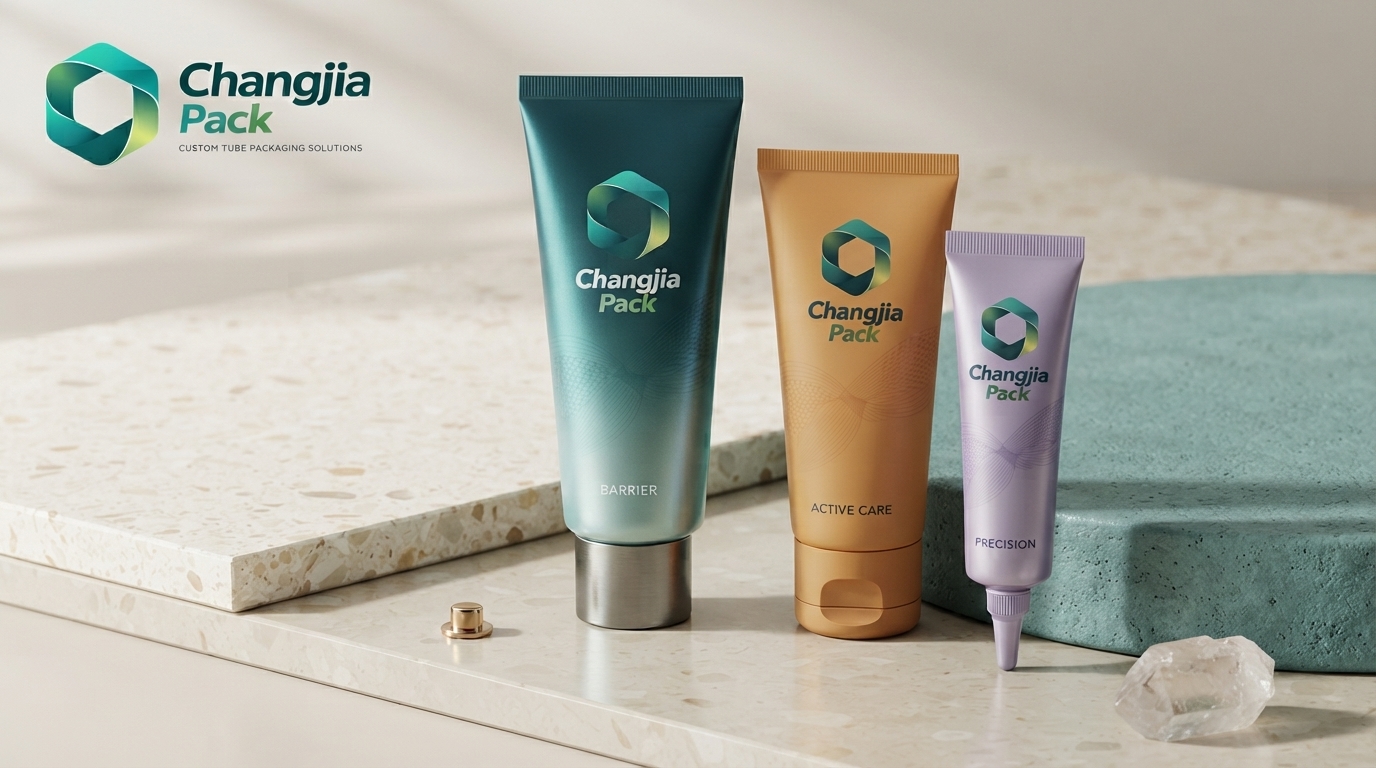
When cosmetic brand owners and contract filling partners select plastic squeeze tubes for their products, they must look beyond basic shelf appeal. Packaging active skincare formulas, sensitive emulsions, and high-viscosity personal care products requires a careful balance of chemical compatibility, barrier protection, and precision dispensing. For products ranging from high-performance serums to daily body washes, selecting the wrong tube material or closure design can lead to formulation oxidation, active ingredient degradation, or product leakage. This guide breaks down the essential material, decorative, and functional considerations necessary to build a highly reliable and visually arresting packaging solution.
Material Science and Barrier Technologies (PE, PBL, and EVOH)
The foundation of any high-performance tube is its material composition. Basic single-layer PE (polyethylene) tubes offer excellent elasticity and flexibility, but they provide minimal gas barrier protection. For formulas containing active botanicals, vitamins, or essential oils prone to oxidation, multi-layer co-extruded tubes featuring an integrated EVOH (ethylene vinyl alcohol) barrier layer are crucial. This thin internal resin layer blocks oxygen transmission and prevents volatile fragrances from escaping. Alternatively, PBL (Plastic Barrier Laminate) tubes offer excellent shape-retaining memory and allow for edge-to-edge printing of complex graphics. When selecting packaging for highly active lines, analyzing how the tube material behaves under squeezing pressure and chemical exposure is vital to maintaining shelf life.
- Multi-layer co-extrusion with EVOH prevents oxygen ingress and keeps formulas stable.
- PBL structures preserve tube shape over repeated usage while providing reliable barrier properties.
- Mono-material PE options represent a valuable path forward for brands targeting high recyclability.
- High-performance barrier materials prevent active oil and surfactant migration through the plastic.
Precision Dispensing and Specialized Applicators
The mechanical interface between the tube and the consumer is critical. Actives like retinol and targeted serums require controlled dosing to ensure safe and effective use. Traditional flip-top caps and wide-orifice screw caps are perfect for large-volume products like cleansers or thick creams, but they can lead to formula waste and cross-contamination when applied to concentrated treatments. Incorporating precision nozzle tips or integrated metallic applicators helps manage product dispensing while elevating the overall user experience.
- Narrow nozzle tips prevent air back-suction and provide clean, drop-by-drop dispensing.
- Integrated alloy tips offer a refreshing cooling sensation, highly suited for eye cream tubes.
- Flip-top closures provide convenient, single-handed dispensing for daily personal care tubes.
- Precision-molded threads prevent leakage and maintain sealing integrity during high-pressure transit.
Surface Protection and Decorative Durability
Cosmetic packaging must look premium on the shelf and remain immaculate throughout its lifecycle. However, active formulations can migrate through the plastic and interact with external inks, causing decoration to peel or fade. To counter this, cosmetic tubes must utilize protective over-varnishes and chemically resistant inks. Depending on the design complexity, brands can choose between offset printing for fine gradients, silk screen printing for tactile textures, and hot foil stamping for premium metallic branding.
- Chemical-resistant matte or gloss varnishes protect printed artwork from oil exposure.
- Silk screen printing delivers high color opacity and raised textures on pearlescent surfaces.
- Offset printing is ideal for highly complex multi-color designs and photographic artwork.
- Hot stamping in gold or silver foils provides a high-end reflective finish.
Aligning Tube Dimensions with Formula Viscosity
Mismatches between tube diameter, length, and formulation viscosity can cause issues on the automatic filling line or lead to consumer frustration. Low-viscosity formulas like watery serums and light lotions require smaller tube diameters with narrow orifices to prevent dripping. Conversely, high-viscosity products like clay masks, heavy body scrubs, and thick protective creams require wider tube diameters and broad orifices to ensure smooth dispensing without splitting the tube's tail seal under hand pressure.
- Small diameters (16mm to 25mm) are optimized for low-volume, high-value treatments.
- Medium diameters (30mm to 40mm) support standard volumes for cleansers and hand creams.
- Wide diameters (45mm to 50mm) are essential for high-viscosity body and hair care formulations.
- Tail sealing parameters must be precisely matched to the specific plastic density to prevent structural welds from splitting.
Buyer checklist
- Perform rigorous long-term stability testing to confirm chemical compatibility between active ingredients and the tube's barrier layer.
- Select the optimal tube diameter and nozzle style based on the formula's viscosity and dispensing requirements.
- Verify if the formulation is light-sensitive and specify opaque plastic or multi-layer EVOH co-extrusion where necessary.
- Choose a printing technique (such as offset or silk screen) that fits the artwork design while applying a chemical-resistant over-varnish.
- Confirm the tail sealing style (e.g., straight line, curved, or hang-hole) with your retail placement and shipping logistics.
- Coordinate mechanical tolerances, shoulder shapes, and thread types with your contract filling partner before production.
- Review regional environmental guidelines to ensure material selections (such as PCR or mono-material PE) meet target market recycling criteria.
Frequently asked questions
What is the primary difference between PBL and co-extruded PE tubes?
PBL (Plastic Barrier Laminate) tubes are formed from a pre-printed flat laminated sheet that is welded into a cylinder, enabling high-definition, edge-to-edge printing. Co-extruded PE tubes are extruded as seamless cylinders, providing a smooth exterior without a side seam, which is ideal for classic, minimalist cosmetic designs.
How does an EVOH barrier layer protect active cosmetic ingredients?
EVOH (Ethylene Vinyl Alcohol) is a co-extruded barrier resin layer positioned within the tube's plastic walls. It acts as an impermeable shield that blocks oxygen transmission, preventing sensitive actives like Vitamin C or retinol from oxidizing, and stops volatile fragrances from escaping.
Can high concentrations of essential oils degrade plastic squeeze tubes?
Yes. Pure essential oils and certain active surfactants can permeate standard single-layer LDPE tubes over time, leading to tube collapsing, swelling, or print peeling. For these formulas, multi-layer tubes with an EVOH barrier or PBL structures are required to prevent molecular migration.
What parameters must be aligned with a contract filling partner?
You must share the tube's structural material (PE, PBL, or ABL), the exact diameter, length, shoulder configuration, cap style, and the recommended tail-sealing temperature. Filling partners need these details to configure the heating elements and mechanical clamps on their automated filling lines.